Overview:
In this project we designed a product for the elderly to monitor their health. Since the elderly are more prone to health issues, especially heart attack and high blood pressure. The device will help them to monitor heart rate, blood pressure and also temperature in real time. The device can call for help automatically or the user can use it to call for help whenever they need. Data from the device will be recorded and sent to hospital/doctor's database for reference.
The device is supposed to be small, portable, light and super easy to use to be suitable for the targeted users which are the elderly.
well, we had a 55-page project report, so I won't repeat those points in the report here. Instead, I will give this post a personal touch by presenting my thoughts and experience when doing this project.
It's true that the elderly's needs are often overlooked, since the young seems to have more consuming power. However, as the society is growing older and people's life spans is increasing, the population of the elderly is also increasing. Therefore their needs are also important.
The most difficult problem that we encounter is the generation gap between us and this user group. This is because we are too young to understand their needs and may misinterpret them. For example: when thinking of the elderly, we tend to think that they would want something that is as simple as possible, and that's all. However, according to That's why user research is especially important for our project, but we have difficulties in finding users to do research. We just try to find old people in our own family and neighborhood, hence it's rather limited.
Another big problem for our project is that although we tried a lot, we cannot possibly 'produce' a good high fidelity prototype. A high fidelity prototype is very important, because it's when the users will really 'feel' the device, since the high fidelity prototype is supposed to closely resemble the real product. Hence, the reactions of users when interacting with our prototype may not be the 'real' reactions.
Via this project, again, I know the importance of user research. Not only at the prototype phase, but at ANY phase, from the beginning with finding targeted group, finding users' needs, to planning phase with deciding which features and functions to include... to final phase with testing the prototype... Yep, nothing should be presumed. If we presume anything from the start and then later realize that our presumption is not right, it would be painful =) Fortunately we wasn't in such a scary situation, but I had to admit that we was temped to create a fancy product right at the beginning (our initial idea was a game, then a new kind of TV that can be used to surf web haha)
Okay, just another random comment: I agree with Kayvern that MSN is extremely useful =)
Hope that some day I will see a product like the one that we design...
Thursday, April 24, 2008

Final thoughts
(yay)
Well, when I took the module, I never thought that I'll have to do so much research. Research is everywhere in NUS, but for this module we almost do research every week. It's extremely important because the focus is on USER experience, not designers' experience. Yep, the focus is on users themselves. If we dont have research, we won't be able to guess what users have in mind correctly and may introduce something the users don't need and don't want. Our product is for users to use, what's the point of it if users don't want and dont need it?
However, research is very difficult to conduct =( it's because it's very subjective. We've got to do a lot, but I think it's still not sufficient enough. (The main problem is our high fidelity prototype... As long as we haven't been able to introduce a 'real' high fidelity one that works just like the real product, there's no way we can receive the 'real' reactions from users...)
Another important thing that I've learnt in this module is that: Dont try to include everything, and dont try to satisfy everyone, because it's impossible! everyone has different taste. It has always seemed to be really scary when we have to exclude other user groups. We may think that the group we are targeting is not sufficient. Take the example from Mr Reddy about Chilly crab: some may afraid that if their chili crab is spicy, then not many people will be able to take it, and they make it milder, so that everyone can eat. after all, no one wants that. Those that cannot eat spicy food just simply turn to food that is not spicy at all. Take a look at some advertisements that says "Only for the strong " (I cannot remember exactly). Those advertisements are not afraid to narrow down their target users, and this make their target users feel more exclusive, more privileged.
User experience is not about the most usable product or the most beautiful product. It's about a desirable product that creates good feeling, pleasant experience for users, targeted users. Users will decide whether they want the product to be more about functions and usability or more about looks and fashion and style.
Well, when I took the module, I never thought that I'll have to do so much research. Research is everywhere in NUS, but for this module we almost do research every week. It's extremely important because the focus is on USER experience, not designers' experience. Yep, the focus is on users themselves. If we dont have research, we won't be able to guess what users have in mind correctly and may introduce something the users don't need and don't want. Our product is for users to use, what's the point of it if users don't want and dont need it?
However, research is very difficult to conduct =( it's because it's very subjective. We've got to do a lot, but I think it's still not sufficient enough. (The main problem is our high fidelity prototype... As long as we haven't been able to introduce a 'real' high fidelity one that works just like the real product, there's no way we can receive the 'real' reactions from users...)
Another important thing that I've learnt in this module is that: Dont try to include everything, and dont try to satisfy everyone, because it's impossible! everyone has different taste. It has always seemed to be really scary when we have to exclude other user groups. We may think that the group we are targeting is not sufficient. Take the example from Mr Reddy about Chilly crab: some may afraid that if their chili crab is spicy, then not many people will be able to take it, and they make it milder, so that everyone can eat. after all, no one wants that. Those that cannot eat spicy food just simply turn to food that is not spicy at all. Take a look at some advertisements that says "Only for the strong " (I cannot remember exactly). Those advertisements are not afraid to narrow down their target users, and this make their target users feel more exclusive, more privileged.
User experience is not about the most usable product or the most beautiful product. It's about a desirable product that creates good feeling, pleasant experience for users, targeted users. Users will decide whether they want the product to be more about functions and usability or more about looks and fashion and style.
Reflections on Smoke and Mirrors Readings :)
Well, I TOTALLY agree with the author that User research is almost always subjective (if not ALWAYS!). No matter how much user research was done, it's the designers who interpret the data, and that's where subjectivity comes in.
So we have quantitative research and qualitative research. Which one is better?
Well, the answer (at least for me) is both are equally necessary.
Qualitative research may create even more room for subjectivity, I agree. But it gives us significant insights in users' thoughts, feelings, reasons, explanations for behaviors, needs, desires... And quantitative research, although dealing with very 'scientific' numerical data, may also be subjective. Without qualitative research to validate the findings from numbers, they can be misleadings. Take the eye tracking tool as an example: when users' eyes stop for a while at a spot on the screen, is it because they find that point interesting, or so hard to figure out that they need more time? well, some designers will tend to prefer the first one =) (of course, it sounds more promising right?) And people will use all those numerical data as their evidence, which may not be right... That's how quantitative data becomes dangerous, since it 'sounds' more accurate than qualitative one and sounds more convincing. I'm not saying that quantitative data is not necessary at all, since it gives us more data about the trends of the majority, but people may abuse it for their own preference =(
So everything is subjective, so every user research is subjective, then what's the point of user research? *_* well, user research is extremely important to reduce the subjectivity to the lowest extent possible. This is because designers alone cannot decide what users want and dont want, what users like and don't like. Therefore, instead of sitting in a closed room and think 'what do user like?', it's much better if they go out and just ask the real users what they think =) The important thing to note is that he/she shouldn't be biased, and shouldn't have a preference in mind. Let the users decide what is good for themselves. And dont forget the right combination of qualitative and quantitative research.
So we have quantitative research and qualitative research. Which one is better?
Well, the answer (at least for me) is both are equally necessary.
Qualitative research may create even more room for subjectivity, I agree. But it gives us significant insights in users' thoughts, feelings, reasons, explanations for behaviors, needs, desires... And quantitative research, although dealing with very 'scientific' numerical data, may also be subjective. Without qualitative research to validate the findings from numbers, they can be misleadings. Take the eye tracking tool as an example: when users' eyes stop for a while at a spot on the screen, is it because they find that point interesting, or so hard to figure out that they need more time? well, some designers will tend to prefer the first one =) (of course, it sounds more promising right?) And people will use all those numerical data as their evidence, which may not be right... That's how quantitative data becomes dangerous, since it 'sounds' more accurate than qualitative one and sounds more convincing. I'm not saying that quantitative data is not necessary at all, since it gives us more data about the trends of the majority, but people may abuse it for their own preference =(
So everything is subjective, so every user research is subjective, then what's the point of user research? *_* well, user research is extremely important to reduce the subjectivity to the lowest extent possible. This is because designers alone cannot decide what users want and dont want, what users like and don't like. Therefore, instead of sitting in a closed room and think 'what do user like?', it's much better if they go out and just ask the real users what they think =) The important thing to note is that he/she shouldn't be biased, and shouldn't have a preference in mind. Let the users decide what is good for themselves. And dont forget the right combination of qualitative and quantitative research.
Assignment 3... episode 3
Finally , solutionsssssssssssssssss!
These are only suggested solutions to SOME of our described problems. We know that the constraints are always there... and not all the solutions may be applicable...
- Improve the seats: longer back rest for tired necks and backs. Sliding chairs with spring that make the chairs sliding back to under the table to create more space between the rows. Locking mechanism for users to set the preferences
- Decrease the number of rows, and the number of seats in each row (making each seat more accessible)
- Decrease the lecture size
- Try to direct the entrance to the front of the lecture
- Every sear will have a set of: power inlet , an earphone inlet to help students to concentrate, a microphone for students to answer or to ask questions.
- System that allows students to send their questions in real time to lecturer using mobiphone/laptop
- prevent noise from doors by using sliding doors
- bench tables format: with big surfaces
- Use multi-angle viewing screens
- Colors can also affect study mood --> use bright colors to stimulate the brains
- Simplify the media controls for lecturer (see the slides about the interface)
- Increase the temperature: 25-27: not too cold
- Classes should be pushed down to start at 10 am
These are more or less technical. Some of those solutions require more resources, which are limited. For ex: decrease the lecture size --> more lecture halls must be built and more staff required.
For cultural problems, it would depends on the people themselves, and it's hard to change. However, we would like recommend following solutions for them to practice:
- Lecturers should add humor to the lectures. The content of the lesson should relate to the real life problems and be practical.
- actively engage students by asking questions or by small class activities.
- Apply learning process theories with punishments and rewards: take attendance for lectures - about 10-15% of the final grade, give some tips and information which is not in the lecture notes. Lectures can also have small and fun prizes for those who answer questions ("a candy for an answer people! no matter right or wrong!"). Small in-class quizzes which is not counted toward the grades not only helps marking attendance but also facilitate students' knowledge. Students who come late are required to participate in class activities first.
These are only suggested solutions to SOME of our described problems. We know that the constraints are always there... and not all the solutions may be applicable...
- Improve the seats: longer back rest for tired necks and backs. Sliding chairs with spring that make the chairs sliding back to under the table to create more space between the rows. Locking mechanism for users to set the preferences
- Decrease the number of rows, and the number of seats in each row (making each seat more accessible)
- Decrease the lecture size
- Try to direct the entrance to the front of the lecture
- Every sear will have a set of: power inlet , an earphone inlet to help students to concentrate, a microphone for students to answer or to ask questions.
- System that allows students to send their questions in real time to lecturer using mobiphone/laptop
- prevent noise from doors by using sliding doors
- bench tables format: with big surfaces
- Use multi-angle viewing screens
- Colors can also affect study mood --> use bright colors to stimulate the brains
- Simplify the media controls for lecturer (see the slides about the interface)
- Increase the temperature: 25-27: not too cold
- Classes should be pushed down to start at 10 am
These are more or less technical. Some of those solutions require more resources, which are limited. For ex: decrease the lecture size --> more lecture halls must be built and more staff required.
For cultural problems, it would depends on the people themselves, and it's hard to change. However, we would like recommend following solutions for them to practice:
- Lecturers should add humor to the lectures. The content of the lesson should relate to the real life problems and be practical.
- actively engage students by asking questions or by small class activities.
- Apply learning process theories with punishments and rewards: take attendance for lectures - about 10-15% of the final grade, give some tips and information which is not in the lecture notes. Lectures can also have small and fun prizes for those who answer questions ("a candy for an answer people! no matter right or wrong!"). Small in-class quizzes which is not counted toward the grades not only helps marking attendance but also facilitate students' knowledge. Students who come late are required to participate in class activities first.
Assignment Nightmare (cont.)
So here comes an assignment which deals with a very realistic and familiar issue of students: user experience in lectures, and we would need to find a way to improve it technically and culturally.
For this assignment, we adopted two research methods: Ethnographic study, Cultural probes and Laddering. These are quite popular methodologies. This is because those methodologies are not too time consuming like others. For ethnographic, we only need to observe people in their own comfort zone, whereas Cultural probes gives us some insight about users' thoughts and needs.
To gain more information, we also employ the methodology by using a diary.
I Ethnographic Study:
We observe 3 following different lectures:
- LT32, 4 -6 pm, 120 - 140 students
- LT 8, 12-2pm, 70-100 students
- LT 11, 2-4pm, 120-140 students.
Ethnographic research:
We try to observe the environment, focusing on following key points:
Laddering: gain more information about users' need
Following are the findings that we have noticed:
1)Issues with the design of the lecture theater:
Tight space between the rows make it difficult for movement
The tables are too small for laptops, leaving alone other things like pens and notes... They are also not user friendly for left handers.
Lecture halls are too big to make students feel involved
Even so, the class size is too big and lecture halls sometime don't have enough seats for students
not enough power points for laptops
Sometimes screen is not clear
Noisy doors
Media controls are not user friendly and make lecturers spend more time figuring out how to use
Accessibility of some lecture halls
Early lectures (8 AM)
Lecture halls are too cold
2) Cultural problems:
+ Student's side:
Since sometimes there are not enough seats, students often have their friends to reserve the seats. They also refuse the seats in the middle since those seats are not very accessible.
Students talk noisily
Students come late for class, interrupting the lectures and distract other students when they move inside.
Students do not interact with the lesson, don't ask questions and don't answer questions.
+Lecturer's side:
Some lecturers do not make an attempt to engage students.
Lecturers' voices are monotonous. Some lecturers' voices are clear and difficult to listen to.
When lecture notes are too general and difficult to follow, the students would solely focus on taking notes as much as possible and cannot listen to the lecture thoughtfully. When the lecture notes are too specific and details, students will skip class since everything the lecturer teach is inside the notes.
(to be continued)
For this assignment, we adopted two research methods: Ethnographic study, Cultural probes and Laddering. These are quite popular methodologies. This is because those methodologies are not too time consuming like others. For ethnographic, we only need to observe people in their own comfort zone, whereas Cultural probes gives us some insight about users' thoughts and needs.
To gain more information, we also employ the methodology by using a diary.
I Ethnographic Study:
We observe 3 following different lectures:
- LT32, 4 -6 pm, 120 - 140 students
- LT 8, 12-2pm, 70-100 students
- LT 11, 2-4pm, 120-140 students.
Ethnographic research:
We try to observe the environment, focusing on following key points:
- Lecture hall's design
- Students' behavior
- Lecturers' behavior
Laddering: gain more information about users' need
Following are the findings that we have noticed:
1)Issues with the design of the lecture theater:
Tight space between the rows make it difficult for movement
The tables are too small for laptops, leaving alone other things like pens and notes... They are also not user friendly for left handers.
Lecture halls are too big to make students feel involved
Even so, the class size is too big and lecture halls sometime don't have enough seats for students
not enough power points for laptops
Sometimes screen is not clear
Noisy doors
Media controls are not user friendly and make lecturers spend more time figuring out how to use
Accessibility of some lecture halls
Early lectures (8 AM)
Lecture halls are too cold
2) Cultural problems:
+ Student's side:
Since sometimes there are not enough seats, students often have their friends to reserve the seats. They also refuse the seats in the middle since those seats are not very accessible.
Students talk noisily
Students come late for class, interrupting the lectures and distract other students when they move inside.
Students do not interact with the lesson, don't ask questions and don't answer questions.
+Lecturer's side:
Some lecturers do not make an attempt to engage students.
Lecturers' voices are monotonous. Some lecturers' voices are clear and difficult to listen to.
When lecture notes are too general and difficult to follow, the students would solely focus on taking notes as much as possible and cannot listen to the lecture thoughtfully. When the lecture notes are too specific and details, students will skip class since everything the lecturer teach is inside the notes.
(to be continued)


Saturday, February 2, 2008
Assignment 2: Four pleasure analysis
Subject's profile:

Joan is a 22 years old student at NUS, majoring in CNM. She comes from a middle class family, and she's come to Singapore to study. She now lives in a modest HDB department with her friends, who are also foreign students.
Joan's grade is good, but all work and no play is not her style. She leads a healthy life. She is the president of the hiking club in her school. Since she also loves traveling, hiking not only helps her to keep fit, but also give her a chance to go to many beautiful places. When she cannot afford time to go hiking, she run every night around her neighborhood to keep fit.
Joan is a cheerful person. People always see her smile, and she enjoys what life brings to her since she does not want to make it too complicated. Living far away from her family makes her stronger, more confident and independent. Although she is in her studying, she is also working as a freelance journalist about traveling and tourism. She's quite an organized and a self-disciplined person and whether it is work or play, she concentrates on whatever she is doing. She does what she wants, tries her best in everything she does. She rarely compares herself to others, and hence she is not a competitive person.
Unlike many other girls, Joan is not shopaholic. She is not into those expensive, high tech or beautiful stuff. She will also not buy something JUST because everyone else is buying it. If she ever buy an Ipod, it will not because it's in trend or it's an iconic symbol. What she loves is simplicity, functionality, endurance and user friendliness. She's a simple girl who prefers wearing jeans and Tshirts to skirts and dresses, since she thinks that it will be more convenient.
Joan is quite popular. She has a lot of friends and enjoys gathering and talking with them. She also has a blog to keep in touch frequently with her friends and family back in her hometown. Her blog often receives lots of comments and is updated frequently with her activities and pictures of places that she has come.
Though she is attractive, Joan is still unattached. She feels that her life is too busy and packed of interesting events. She doesn't want to make it more complicated with a romantic relationship. Although sometimes she feel bored and lonely, she overcomes by going out with her best friends, or go playing sports.
4 pleasure analysis:
Physio-pleasure:
- She loves to play sport. Hiking helps her to keep fit and let her to go to many places. - need pleasure.
- She wears simple clothes for convenience and the easy movement. (appreciation pleasure)
- She also listen to music to de-stress. She's not selective about what to listen to, but she usually finds pop music relaxing. (appreciation pleasure)
Socio-pleasure:
- Joan is a socially active person. She loves to gather with her friends. Surrounding by friends and chatting with them make her happy (need pleasure)
- She treasure all the memories with her friends. No matter bad or good memories they are, she considers them as parts of her life. (appreciation pleasure)
- She keeps her blog updated to show friends and family how her life is going. (need pleasure)
Psycho-pleasure:
- Going hiking gives her the feel of achievement, since this is not a popular sport, and it's pretty tough with a girl.
- Her life is full of activities and she can always think of something to do. Therefore, she never gets bored.
- She also feels contend because of her ability to take good control of her own life.
Ideo-pleasure:
- She believes in freedom and independence. She does what she wants, regardless of what people think. Therefore, she also never forces people to think the way she thinks, since she knows that people always have the right to have their own thinking.
Product Benefit Specification:
- not too expensive.
- should be able to connect to Internet
- does not need to have too many complex functions
- suitable for her active and sporty lifestyle
- have camera function
- durable so that she can bring along everywhere without being too careful.
- easy to use, simple and classic design
- calendar function to get organized.
I think that the possible phone suitable for Joan is Nokia Sport 5500.
Some features include:
- Instant Swap key for quick one key switching between phone, music, and sports modes: easy to use, convenient.
- Stainless steel body designed to withstand bumps, dust, and water splashes: durable.
- 3D sensor for tapping command to play music or voice feedback in sports tracking: convenient for Joan to listen to music while playing sport.
- Sports tracking user interface monitors your exercise and displays training data, speed and distance, steps taken, and calories burned.
- Have bluetooth and infared function for easy connection with PC. USB 2.0 full speed with mass storage profile
- Simple and neat design.
- Can use with a strap to bring along when playing sport.
- Come with 64MD SD card, so that Joan can store more files and data.
- 2.0-megapixel camera with up to 4x zoom, self-timer, and camera modes: still and video. Options for night photos, brightness adjustment, and image quality. Image formats supported: JPEG, GIF, EXIF, WBMP, BMP, MBM, PNG
- FM stereo radio.
- EDGE (EGPRS): Class 10 (requires network support). GPRS: Class 10
Monday, January 21, 2008
Assignment 1 - Product and Emotion
Some thoughts about the first assignment. As I guessed, many of the products presented are quite familiar with us. We even had 3 classmates presenting about 1 same thing: the bench at MRT stations (guess many of us use MRT, right?). It's easy to see that bad designs are almost everywhere...
In the second lesson, we've learnt that a product can produce 3 different levels of experience, namely:
- visceral: the first stage, the first impression that strucks us
- behavioral: the second stage, when we learn about its function, usability, reliability, how well it can perform... These are the factual properties of a product
- reflective: the third stage. This is where the society has its effect. How will others think about me when I use this product? What can this product tell about me? Marketing campaigns and advertisements will help to form this in customers' minds.
Now I will need to choose a product to illustrate this...your guess? operating systems =p Sound like boring things huh?
1. Our beloved Windows:-
In the second lesson, we've learnt that a product can produce 3 different levels of experience, namely:
- visceral: the first stage, the first impression that strucks us
- behavioral: the second stage, when we learn about its function, usability, reliability, how well it can perform... These are the factual properties of a product
- reflective: the third stage. This is where the society has its effect. How will others think about me when I use this product? What can this product tell about me? Marketing campaigns and advertisements will help to form this in customers' minds.
Now I will need to choose a product to illustrate this...your guess? operating systems =p Sound like boring things huh?
1. Our beloved Windows:-

- visceral: well yes, windows is not tooooo eyecandy, but its graphic user interface is not that bad, right? (compare to, say, Unix which doesnt have a GUI=P)
- behavioral: you might have heard too many compaints about Windows's performance, but dont you wonder why it's still the most popular OS although ppl hate it so much? well, it's easy to use, most softwares are compatible with Windows. Even my friends who are using Mac still need to use Windows parallelly. So I think that I can say this is where Windows is strongest.
- reflective: not much to show off. Everyone has it, so you are not that special. Even worse, the Apple ads potraited PC user as boring people.
2. Mac OS: I believe that emotion for this product is most affected by marketing/ads and its loyal users. Gonna show you now.
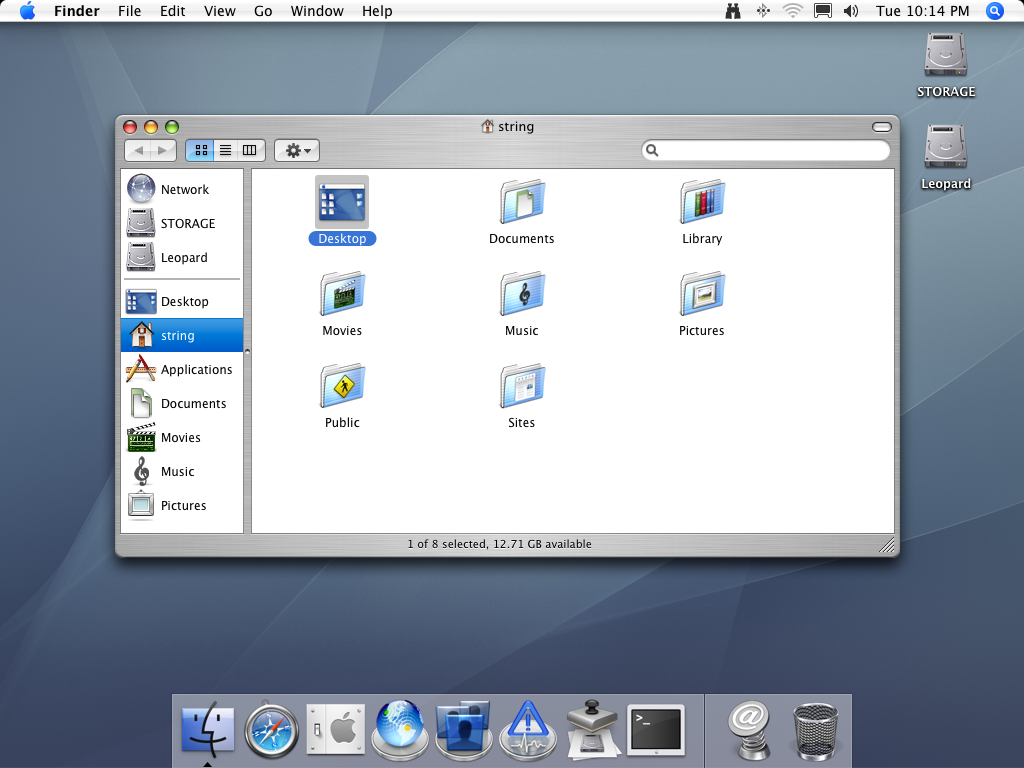
- visceral: I'm gonna give it a 'yes', for Apple's OS is famous for its eyecatching GUI (however, I have to say sometimes, marketing/ads can also interfere what people think is beautiful. Let's say if everyone around you say "any product from this company is so cool. It's designed for style", then eventually it will affect your emotion also.)
- behavioral: I haven't used it. It's agreeable that its performance is good, but yet again, many people overrated it. I've heard people to say something like "a Mac never has any virus", and it's not true. Also, not every software is Mac compatible.
- Reflective: young, punky, ... anything related to 'cool'.
3. Linux:
- behavioral: I haven't used it. It's agreeable that its performance is good, but yet again, many people overrated it. I've heard people to say something like "a Mac never has any virus", and it's not true. Also, not every software is Mac compatible.
- Reflective: young, punky, ... anything related to 'cool'.
3. Linux:
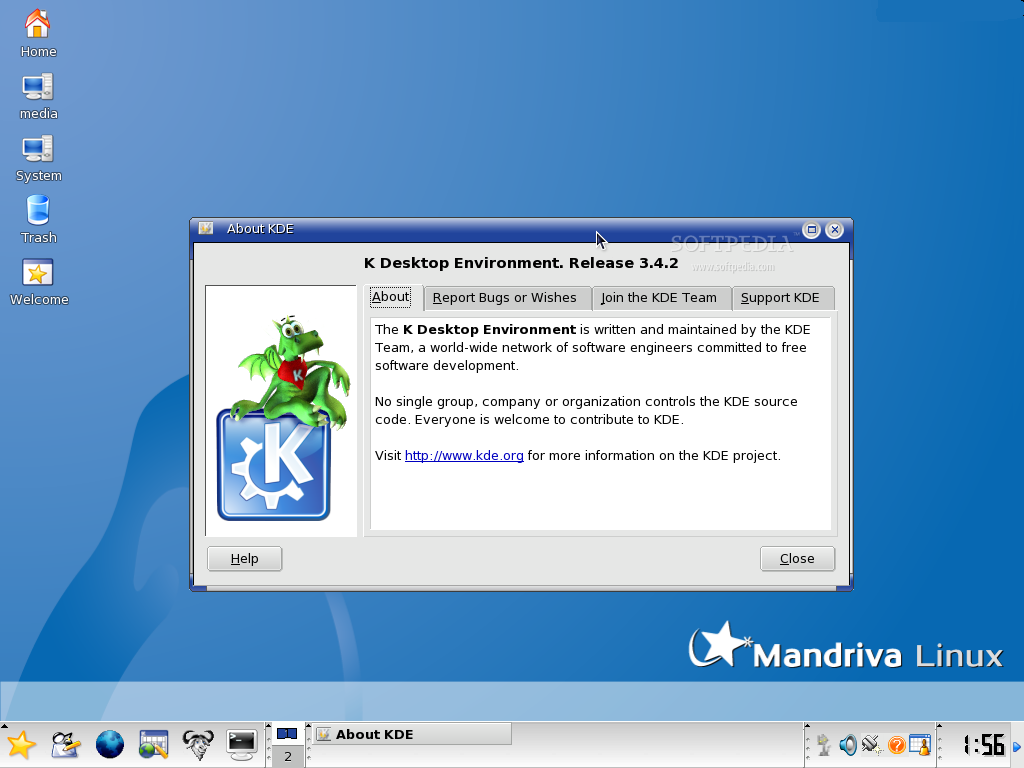
- visceral: nothing special compared to Windows :P but it's not bad.
- behavioral: based on my friends' comments and reviews from internet, Linux has much less virus and much more stable. however, it does not support many softwares, and some of them are pretty popular. One of its biggest advantages is that it's free.
- reflective: it's a change from Windows. The user who use Linux may considered themselves as more computer savvy. They can also feel that they are supporting open source software, which seems to support the freely development of technology.
So that's it. Depending on users' requirement, they may choose different products for different reasons. A business man would prefer Windows, I guess, for its popularity and being easy to use, while a young student may like Mac OS for the cool factor, and finally a computer geek would rate Linux among the best.
Assignment 0: Bad design
So we are required to come up with a bad design. Before doing this assignment, I have had a look at how my fellows are doing and had some thoughts.
- I quite agree with the statement that this assignment is not quite easy as it looks. Why? Because there are TOO many bad designs that we are gradually getting familiar with them and accept them as a part of our life. I cannot count how many time I feel frustrated because of a stupid design, but when asked to tell about them in details, I get stuck.
- Good user experience design may not be the same as good usability, but good usability is a MUST for a good user experience design. The most beautiful design does not always guarantee best user experience. We have always known that Apple brand's design is considered as having most 'kool' designs, yet not all of them are usable (i'm mentioning about Apple's mouse which ppl have no idea where the button is when looking at it).
- However, I may consider the 'legendary" door knob along the Arts corridor to the canteen as the classic example of bad design. Instead of turning it downside, ppl have to turn it upside. Ridiculous, yet I dont know why and how ppl can think of such an idea. Yet I think this example is pretty popular.
Finally when I was on bus A1, I encounter this:
- I quite agree with the statement that this assignment is not quite easy as it looks. Why? Because there are TOO many bad designs that we are gradually getting familiar with them and accept them as a part of our life. I cannot count how many time I feel frustrated because of a stupid design, but when asked to tell about them in details, I get stuck.
- Good user experience design may not be the same as good usability, but good usability is a MUST for a good user experience design. The most beautiful design does not always guarantee best user experience. We have always known that Apple brand's design is considered as having most 'kool' designs, yet not all of them are usable (i'm mentioning about Apple's mouse which ppl have no idea where the button is when looking at it).
- However, I may consider the 'legendary" door knob along the Arts corridor to the canteen as the classic example of bad design. Instead of turning it downside, ppl have to turn it upside. Ridiculous, yet I dont know why and how ppl can think of such an idea. Yet I think this example is pretty popular.
Finally when I was on bus A1, I encounter this:

As all of you may have known, these are the buttons on our bus. Or are they really BUTTONS?
I dont know, because we cannot press them. Yes, they may look like buttons very much, and we thought that they are supposed to be pressed, but they are not. For this, many people have mistaken that the blue button is the "stop" button (even if they can be pressed, I cannot know all of the buttons' function beside the blue one, there's no label on them)
User's reaction:
I have seen many people tried to press the buttons many times only to discovered that the button doesnt work, and they have missed their bus stop for not being able to press the "stop" button on time. Quite confused, I can see, just like me when I first used it.
My friend felt that the buttons should be able to press. If not, then they should be removed completely, so that people will know they have to find and press another 'real' button early enough...
Sunday, January 20, 2008
First post
Just to mark this is MY blog.
Welcome to the world of mine.
- Pham Thi Phuong Thao -
(signed and sealed)
Welcome to the world of mine.
- Pham Thi Phuong Thao -
(signed and sealed)
Subscribe to:
Posts (Atom)